Domestic water systems in commercial buildings, the pipework, tanks and outlets that supply drinking and washing water, can harbour bacteria if they're not installed, cleaned and maintained properly. Disinfection is how a system is made safe before it's used.
When disinfection is needed
- New installations, before they're brought into use
- Extensions and major alterations to an existing system
- After cold water storage tanks are cleaned or repaired
- Where contamination is suspected, or after poor sample results
- When a system or part of it has been out of use for a long period
The standards
BS EN 806 and the UK guidance in BS 8558 require new and altered water installations to be flushed and, where appropriate, disinfected before use. Legionella control in workplaces falls under the HSE's Approved Code of Practice L8 and technical guidance HSG274, which sit alongside your building's water risk assessment.
What the process involves
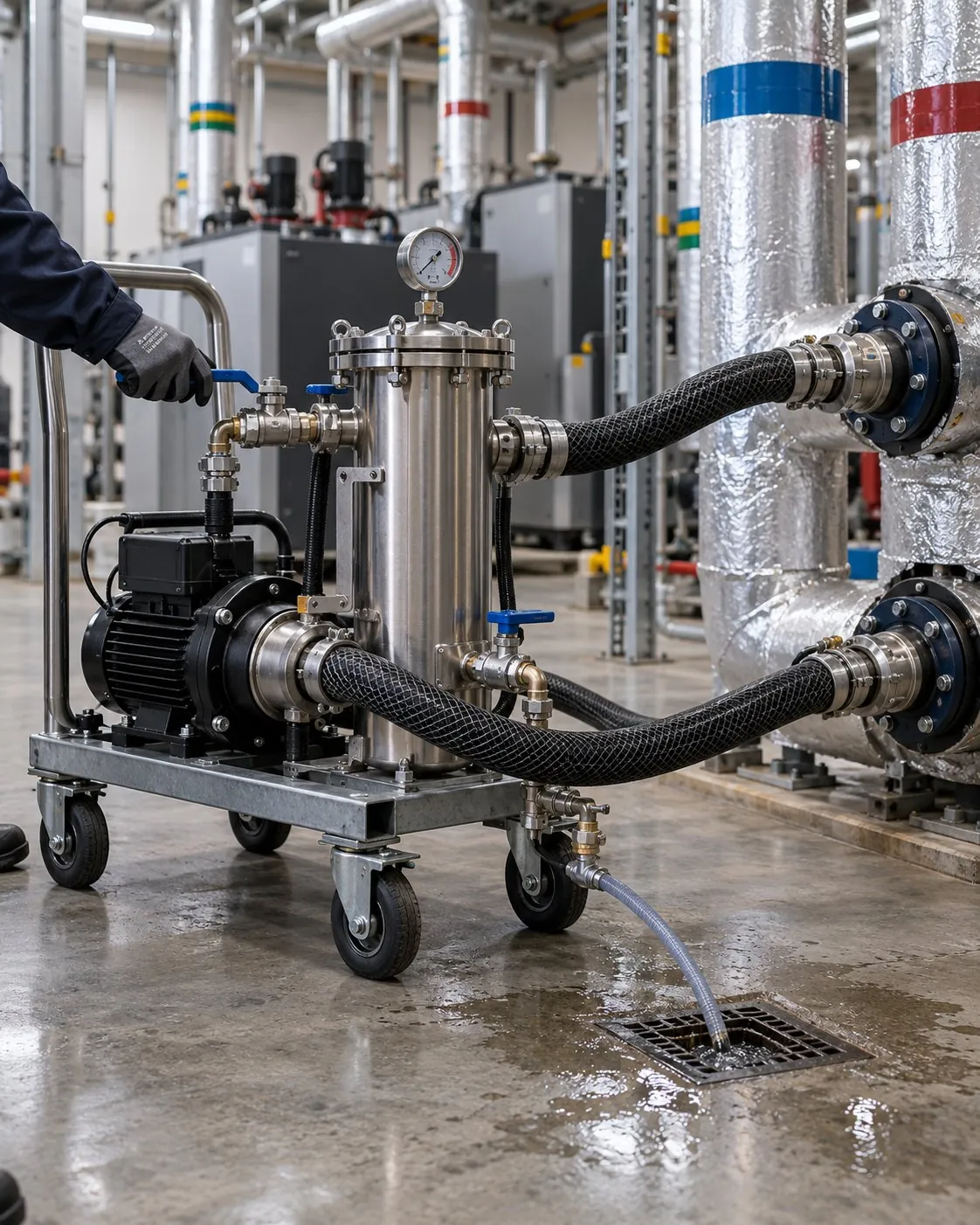
- Flushing the system to remove debris
- Introducing a disinfectant, usually chlorine, at a controlled concentration
- Drawing it through to every outlet and holding it for the required contact time
- Checking residual levels throughout
- Flushing back to normal mains water levels
- Taking water samples for laboratory analysis
- Issuing a certificate and records
Records you should receive
A disinfection certificate should show the system covered, the disinfectant used, the concentration and contact time, residual readings and sample results. Keep it with your water hygiene records and your Legionella risk assessment.
Good practice after disinfection
Disinfection gives you a clean starting point, but the system has to stay that way. Little-used outlets should be flushed regularly, hot and cold temperatures kept in their safe ranges, and tanks inspected. If parts of the system are no longer needed, removing the dead legs is better than leaving them.
How CommGas can help
We're a WaterSafe approved contractor. We install and alter commercial water systems and carry out flushing, chlorination and disinfection with sampling and certificates, for new installations and existing buildings.